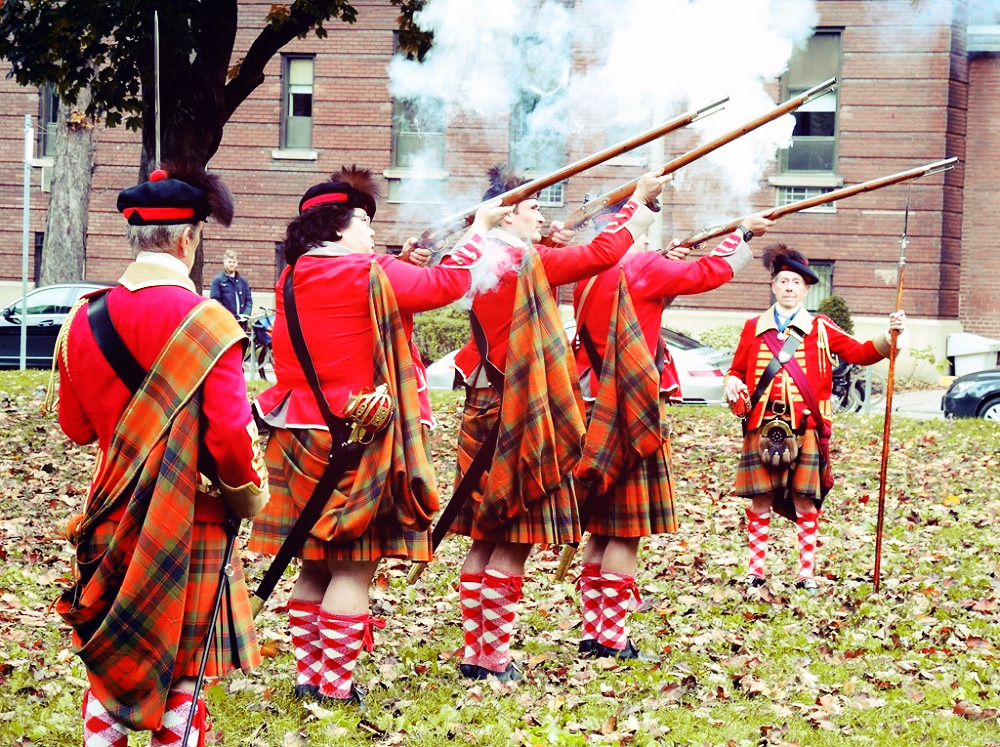
Who were the most notable Fraser Highlanders officers?
The three most notable Fraser Highlanders officers were:
- Colonel Simon Fraser (1726-1782) – Became Lieutenant General, wounded at St Michael Parish and Sillery, fought in American Revolutionary War
- Major James Clephane (died 1768) – Served at Louisbourg, captured at Sluys, became Provost of Nairn in 1765
- Captain Simon Fraser (1732-1759) – Killed at the Battle of Plains of Abraham, age 27
All three served in the Highland Battalion of Foot, raised in 1757 following General James Wolfe’s recommendation.
Officer Overview Table
Officer | Born-Died | Highest Rank | Key Battles | Notable Achievement |
|---|---|---|---|---|
Colonel Simon Fraser | 1726-1782 (age 55) | Lieutenant General | Louisbourg, St Michael Parish, Sillery | Land restoration by Parliament 1774 |
Major James Clephane | ?-1768 | Major | Louisbourg, Sluys, Quebec | Provost of Nairn 1765 |
Captain Simon Fraser | 1732-1759 (age 27) | Captain | Louisbourg, Plains of Abraham | Died of battle wounds |
The Formation of Fraser Highlanders (1757)
During the 18th century, the highlands of Scotland and the people living there were considered to be very perilous for many reasons. The violence and the viciousness of the people of the region led many to believe that they must not be given the weapons which they require or else it would be catastrophic.
General James Wolfe, however, had other ideas and therefore in his letter to Captain William Rickson, he emphasized on the fact that 2 or 3 highlander companies should be formed as the people not only know the war tactics but also they are brave enough to fight the enemies with valor and courage which is required during the war.
As a result of this letter, the Highland Battalion of Foot was raised in 1757 which has many notable officers who would serve in critical campaigns including the Siege of Louisbourg (1758) and the Battle of Quebec (1759).
Rank | Name | Company | Service Details |
|---|---|---|---|
Colonel | Simon Fraser | Field Officer | Master of Lovat; Commander of the regiment (1757-1762) |
Lt Colonel | John Reid | Field Officer | Second-in-command; veteran of Fontenoy |
Major | James Clephane | Field Officer | Fought at Louisbourg and Quebec |
Lieutenant | Donald Fraser | 8th Company | Responsible for company supplies |
Colonel Simon Fraser (1726-1782): The Regiment’s Most Distinguished Officer
- Born in 1726 at Balnain, Inverness-shire, Scotland
- Son of Simon Fraser, 11th Lord Lovat, and Primrose Campbell
- Grew up during the turbulent Jacobite era in the Scottish Highlands
- Commanded light infantry operations during the Quebec campaign of 1759
Colonel Simon Fraser is the most notable officer of the Highland battalion and was considered one of the key figures of the wars which were fought during that era. He is one of the very few officers that sailed for Louisbourg in 1758.
Battle of St Michael Parish (1758)
While commanding some 300 Highlanders on a raid to the St Michael Parish, he was wounded along with Captain John Macpherson. The officers were carried to the camp and therefore these are the only casualties of the raid.
Battle of Sillery (1760)
While commanding the left wing of the army in the Battle of Sillery, the colonel was again wounded and therefore he again missed further action.
Post-War Recognition
In 1774 a special act was passed from the parliament which was further fostered by the crown and he was granted the parental land which he owned. He eventually reached the rank of Lieutenant General in the British Army and also fought in the American Revolutionary War.
He died in 1782 in London at the age of 55. His services to the crown will always be remembered by the British Army.
Major James Clephane (died 1768): Commander of Stewart’s Regiment
- Born circa 1720 in Nairnshire, Scotland, to a landed gentry family
- Educated at local parish schools with emphasis on classical studies
- Raised in the aftermath of the Jacobite Rising of 1715
- Returned to Britain after the Treaty of Paris ended the Seven Years’ War
Major James Clephane is regarded as a prominent figure of the Major General Stewart’s Regiment. He was also present at the capture of Louisbourg in 1758.
Military Service
He was captured at the Battle of Sluys but was exchanged shortly and was put in command and control of the Stewart Regiment. During the expedition of Quebec, he fell ill and was left behind for treatment in New York.
Civilian Leadership
In 1765 he was elected as the Provost of Nairn and he held the post for quite some time. Major James Clephane did not marry throughout his life and died in 1768.
Captain Simon Fraser (1732-1759): Hero of Plains of Abraham
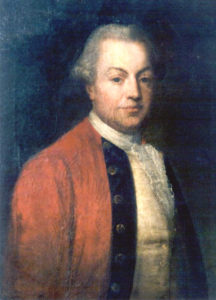
- Born in 1732 in Inverness-shire, Scotland, into the Fraser of Lovat clan
- Member of a prominent Highland family with strong military traditions
- Brother of Lt-Colonel Charles Fraser, who led the Frasers of Lovat
- Promoted to Captain in recognition of his recruiting success and leadership
Captain Simon Fraser started his career as a foot soldier of the 52nd company of the British Army. Soon after the commission, he was transferred to the 50th regiment. His elder brother Charles Fraser was the Lt-Colonel in the British Army and led the Frasers of Lovat.
He was promoted to the captain rank in 1757. He was one of the few officers that sailed for Louisbourg in 1758.
Battle of Plains of Abraham (September 13, 1759)
He was fatally wounded in the Battle of Plains of Abraham and was given constant medical treatment after this. He died of his wounds in October 1759 at the age of 27. He was unmarried and was mentioned on the list of wounded because of his seniority in the regiment.
Frequently Asked Questions
Colonel Simon Fraser was wounded twice during his service – first at the St Michael Parish raid alongside Captain John Macpherson, and again at the Battle of Sillery in 1760. Despite these wounds, he continued his military career, eventually becoming a Lieutenant General in the British Army. He fought in the American Revolutionary War and died in London in 1782 at age 55. In recognition of his service, Parliament passed a special act in 1774 restoring his ancestral lands.
Captain Simon Fraser was fatally wounded at the Battle of Plains of Abraham on September 13, 1759. Despite receiving constant medical treatment, he died from his wounds in October 1759 at the age of 27. He was unmarried at the time of his death and was listed among the wounded due to his seniority in the regiment.
The highest-ranking Fraser Highlanders officer was Colonel Simon Fraser, who eventually reached the rank of Lieutenant General in the British Army. Major James Clephane achieved the rank of Major, while Captain Simon Fraser held the rank of Captain when he died in 1759.
The Highland Battalion of Foot (Fraser Highlanders) was raised in 1757 following a letter from General James Wolfe to Captain William Rickson. Wolfe advocated for forming Highland companies due to their tactical knowledge and bravery in combat.
Fraser Highlanders officers fought in several major battles including:
• Siege of Louisbourg (1758) – All three officers participated
• St Michael Parish raid (1758) – Colonel Fraser wounded
• Battle of Plains of Abraham (1759) – Captain Fraser killed
• Battle of Sillery (1760) – Colonel Fraser wounded
• Battle of Sluys – Major Clephane captured
Major James Clephane was elected as Provost of Nairn in 1765 after his military service ended. He held this civilian administrative position until his death in 1768. Clephane never married during his lifetime.
Last Updated: April 7, 2026